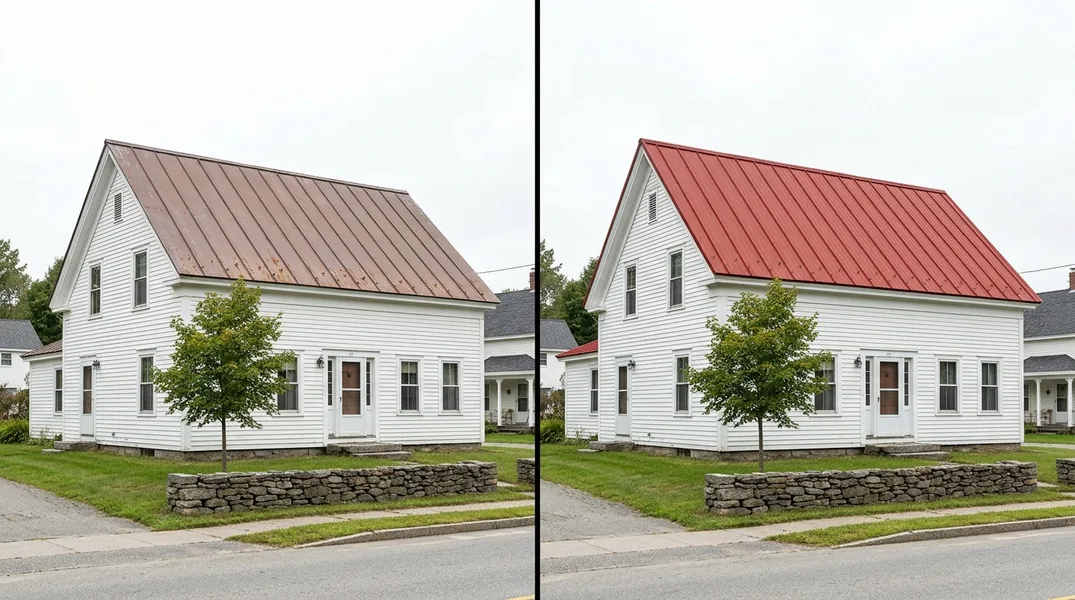
Why Stamford Winters Are Tough on Roofs
If you live in Stamford, you already know that winter here is not a gentle affair. Nor'easters sweep up the coastline, drop a foot of wet snow overnight, then warm up just enough to melt the surface before the temperature plunges again. That freeze-thaw cycle is the engine behind two of the most common winter roofing problems in Connecticut: ice dams and overstressed roof structures. Asphalt shingles, which dominate the local housing stock, tend to absorb and hold moisture at their edges, and once an ice dam forms, water backs up under the shingles and finds its way into ceilings, insulation, and wall cavities.
Metal roofing behaves very differently in these conditions. The smooth, low-friction surface lets snow slide off before it can pile up to dangerous depths, and the reflective finish helps moderate the freeze-thaw cycle at the roof deck. For homeowners in Greenwich and Darien who have watched icicles grow into three-foot spears, the appeal is obvious. But metal roofs are not magic. To get the full benefit, the system has to be designed correctly for snow load, insulated well, and fitted with the right accessories. That is where a proper Metal Roof Installation makes all the difference.
How Metal Roofs Handle Snow Load
Snow load is simply the weight of accumulated snow and ice pressing down on your roof. In Connecticut, residential roofs are typically designed for a ground snow load in the range of 30 to 40 pounds per square foot, depending on elevation and local exposure. Wet, dense snow can weigh 20 pounds per cubic foot or more, so a two-foot drift on a low-slope section can approach the design limit quickly. Metal roofs do not change the physics of snow load, but they do change how snow behaves on the roof. The slick surface and the way standing seams break up the snowpack mean that snow tends to release in controlled slides rather than clinging and refreezing.
That said, a metal roof still needs to be engineered for the load. The panel gauge, the purlin spacing, and the attachment schedule all matter, especially on older homes where the original structure may not have been built for modern snow expectations. A reputable installer will check the framing and specify a panel system that meets or exceeds local code. Standing Seam Metal Roofing is popular in this region because the raised seams add stiffness and the concealed fasteners eliminate the leak points that can worsen ice dam damage on other roof types.
Ice Dam Prevention: Why Metal Sheds Ice Better
An ice dam forms when heat escaping from the house warms the upper roof, melting snow that then refreezes at the cold eaves. The resulting ridge of ice traps water, which backs up under the roofing material. On asphalt shingles, that water often finds its way through nail holes and worn granules. On a metal roof, the story is different for two reasons. First, the metal surface sheds water and slush quickly, so there is less opportunity for meltwater to pool. Second, the smooth panels allow snow to slide off before it can build the thick insulating blanket that drives the freeze-thaw cycle in the first place.
However, ice dam prevention is not just about the roofing material. It is a whole-house issue. Proper attic insulation and ventilation keep the roof deck cold, which is the real key to stopping ice dams. If your attic is under-insulated, even the best metal roof will struggle. Many homeowners in New Canaan discover during a metal roof evaluation that their attic insulation is the weak link. Upgrading insulation and sealing air leaks before or during a Metal Roof Replacement is one of the smartest investments you can make for winter performance.
Snow Guards Metal Roof: Keeping Snow From Sliding All at Once
One of the most common concerns homeowners raise about metal roofs is snow sliding off in a sudden sheet. On a steep roof over a doorway, a driveway, or a walkway, that can be a genuine safety hazard. Snow guards are small brackets or bars mounted on the roof that hold the snowpack in place until it melts or breaks up into smaller pieces. They are especially important over entryways, garages, and anywhere people or vehicles pass below. In Stamford, where many homes have steep pitches and narrow side yards, snow guards are often a practical necessity rather than an optional upgrade.
The right snow guard layout depends on roof pitch, panel type, and the local snow load. Too few guards and the snow still slides; too many and you create point loads that can stress the panels. This is why snow guards should be specified as part of the roof design, not added as an afterthought. If you are considering a Metal Roof Over Shingles (Retrofit), the installer also needs to account for how the added weight and the new snow-shedding behavior will affect the existing structure and the areas below.
Metal Roof Insulation: The Hidden Factor in Winter Performance
Ask any experienced roofer what separates a metal roof that performs beautifully in winter from one that disappoints, and you will usually hear the same answer: insulation. Metal is an excellent conductor, which means it can transfer heat quickly if the roof assembly is not properly detailed. A well-insulated roof deck stays cold on the outside, so snow does not melt and refreeze at the eaves. That single detail is the difference between a roof that sheds snow cleanly and one that grows ice dams despite the metal surface.
In practice, metal roof insulation involves more than rolling out batts in the attic. It means sealing air leaks around chimneys, hatches, and light fixtures, maintaining proper ventilation from soffit to ridge, and in some cases adding a thermal break between the metal panels and the framing. Homeowners in Darien and New Canaan who are planning a roof project should ask their contractor how the insulation strategy will be handled. A good installer will treat the roof as a system, not just a surface. That approach also protects your investment and can lower winter heating bills.
Metal Roof Installation Near Me: When to Call a Pro in Stamford
Not every winter roofing issue requires a full replacement. Sometimes a few well-placed snow guards, a ventilation upgrade, or a targeted repair will solve the problem. But if you are seeing recurring ice dams, water stains on the ceiling, or shingles that are curling and losing granules, it may be time to consider a more permanent solution. A professional assessment can tell you whether your current roof can be improved or whether a metal roof is the better long-term investment. Local experience matters here, because the snow load and freeze-thaw patterns in Stamford are not the same as they are in other parts of the country.
If you would like to understand what a metal roof would involve for your home, including pricing and the right accessories for your roof pitch, the team at Stamford Metal Roofing is happy to help. You can reach us at (475) 275-9394 or request a free estimate to get started. We serve homeowners throughout Stamford and the surrounding communities, and we are glad to walk you through snow load, ice dam prevention, and insulation options in plain language.
Looking for a professional metal roofing contractor in Stamford? Stamford Metal Roofing responds fast for all your metal roofing needs.
Get a Free QuoteOur services: Metal Roof Installation · Standing Seam Metal Roofing · Metal Roof Replacement